AWS IoT SiteWise Edge Gateway Creation Flow
AWS Industrial IoT SiteWise allows for data ingestion and monitoring at scale for large industrial facilities, such as factories. Industrial equipment at the “edge,” or where the data is collected and preprocessed prior to uploaded to the cloud. Industrial equipment typically does not come equipped with all the sensors and connectivity features to enable edge computing, so facilities must install that equipment. To bridge the new sensors and connectivity equipment and allow for data to be preprocessed, an edge gateway is required.
Gateways act as their name implies. They allow data from the industrial site to be preprocessed and passed to the cloud for further use and storage. Industrial facilities typically have windows of allowed connectivity to the cloud for security reasons. We found that some of our customers would only connect and upload once a day. The gateway stores the data on site, securely, while running any preprocessing the user configured (typically, averaging data to save storage space and upload costs - data collected every second of every day accumulates quickly, so averaging into more manageable time chunks is a big money saver).
Creating and configuring an edge gateway is a time consuming process. First, sensors and connectivity equipment must be installed on the industrial device. During the gateway setup process the user was required to have a significant number of highly specific details on hand and ready. We found many users were unprepared for the significant asks required by the process, and they would often not complete the gateway creation wizard.
AWS loves a creation wizard. They are ubiquitous in every service, and there are multiple pages of design pattern documentation dedicated to them. However, they’re not always actually in the user’s best interest, as some AWS services are technically complex and require significant time investment, which leads to user failure, as they either abandon the process to gather the information they need, or worse, they are automatically logged out of AWS due to the security timeout.
In addition to all of that, the existing pages were on a legacy version of the internal design system and React components. There was a mandate from upper leadership to migrate to the “visual refresh” version of the components, which looked more modern and were a large technical upgrade.
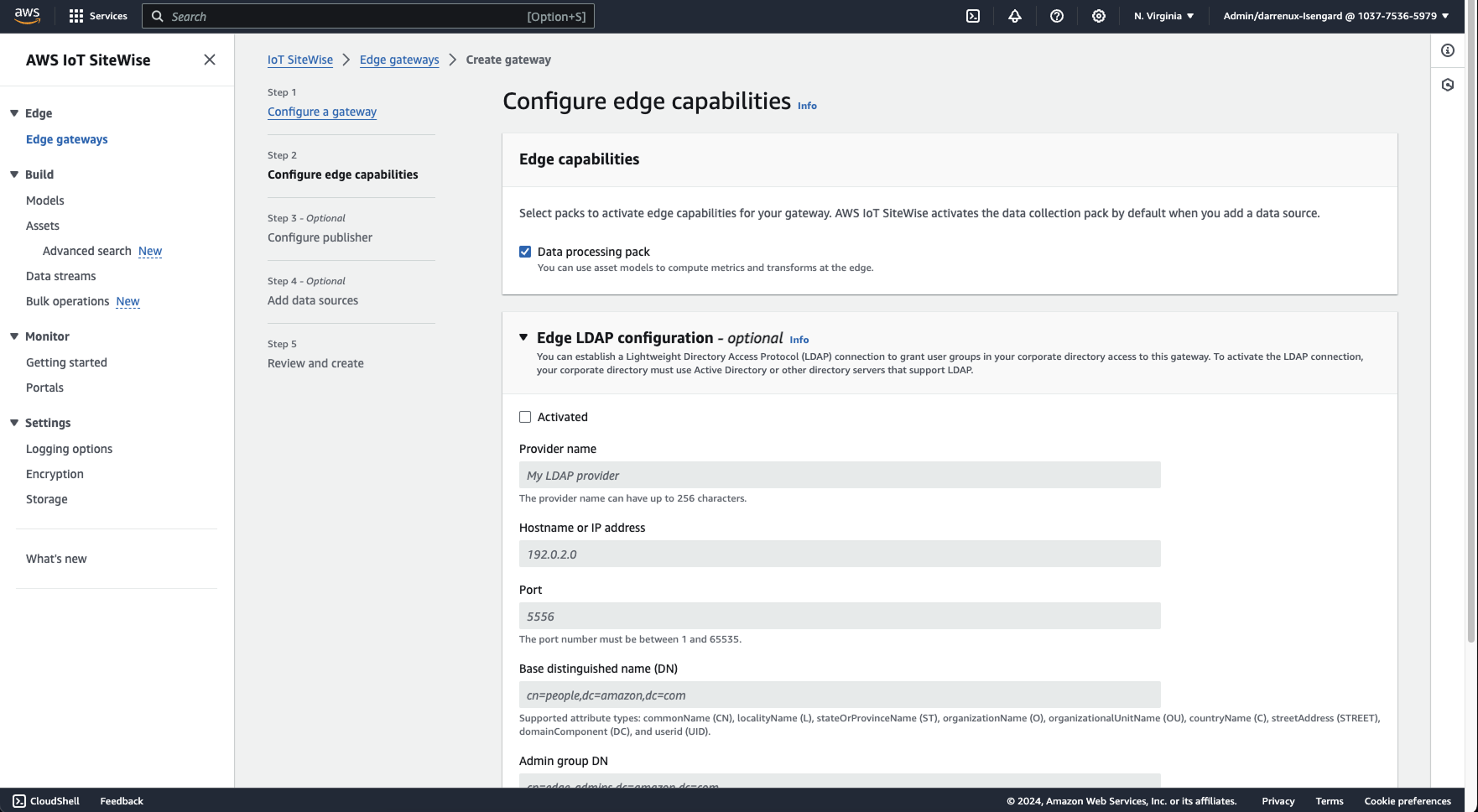
Knowing the usability issues at hand, I proposed we do away with the creation wizard. I proposed and designed a hub page, simplifying the creation process to the bare minimum required to create a gateway. In this new flow, the user would create the gateway, download the necessary configuration software, and then use the new details page as a hub to add anything else they needed to control. This had the added benefit of allowing the gateway to be more configurable for the user in the long run, as they could modify data sources and preprocessing options as needed without using a wizard. They could also create the gateways prior to any other work being done on the factory floor, which would save them setup time when they onboard a new facility.
In the end, we updated SiteWIse to the new “visual refresh,” and created a flow that continues to inspire other services to move away from complicated wizards to allow for more simple flows in otherwise highly complex services.
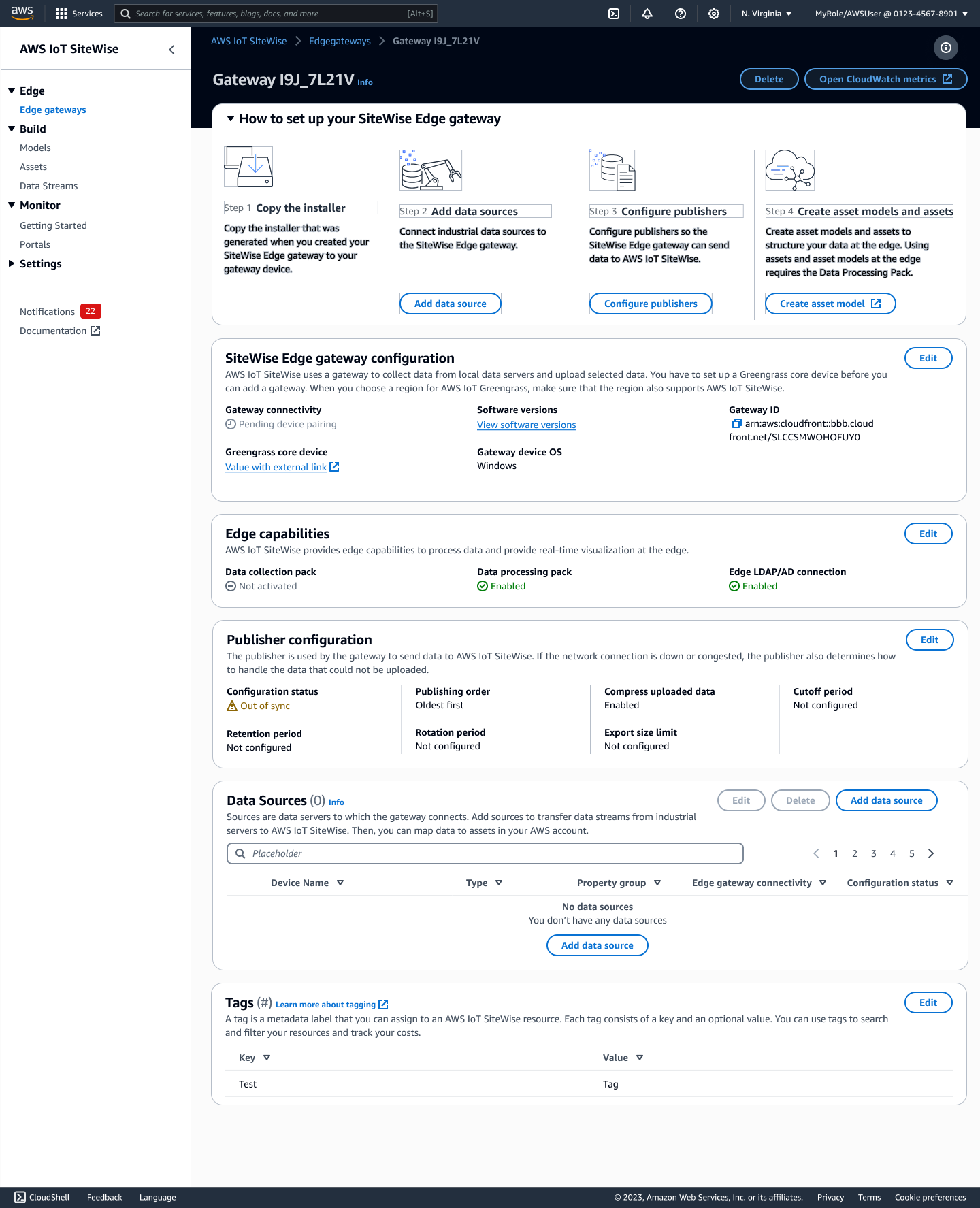
Figma Prototype
This Figma prototype works best at full screen resolution.
Upon building this page I noticed several accessibility errors appear in my testing. These errors originate from the Figma iframe. Unfortunately, I do not have any control over it. If you are using assitive technologies you have my deepest apologies.